How to Check Tire Pressure
Find the door-label PSI, check each tire with a gauge while cold, then add or release air in small steps. Do not use the sidewall maximum.
Short answer
How to check tire pressure is a four-part job: get the recommended cold PSI from the vehicle label, measure each tire at the valve stem, compare the reading with the correct axle, then add or release air and recheck. A dashboard light or phone app can warn you, but it does not replace a gauge when you are changing the pressure.
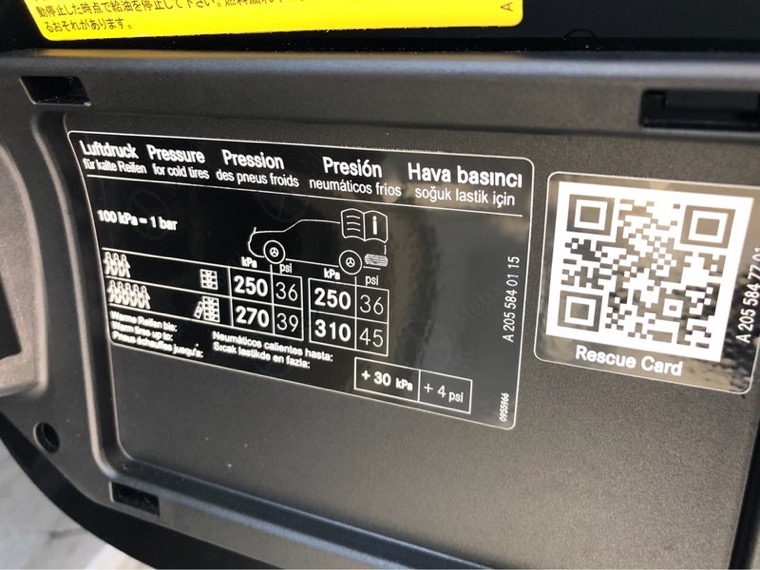
Start on the driver-side door jamb. The Tire and Loading Information label lists the recommended cold pressure for the original tire sizes. Some vehicles print different front and rear numbers. If the label is missing or unreadable, use the owner manual. The large PSI printed on the tire sidewall is a maximum limit for the tire, not the daily target for your car.
NHTSA describes a cold tire as one that has not been driven for at least three hours. That is the condition the label assumes. If you have to check after a drive, treat the higher reading as temporary context. Do not bleed a hot tire down to the cold number and then drive again; the pressure will drop as it cools.
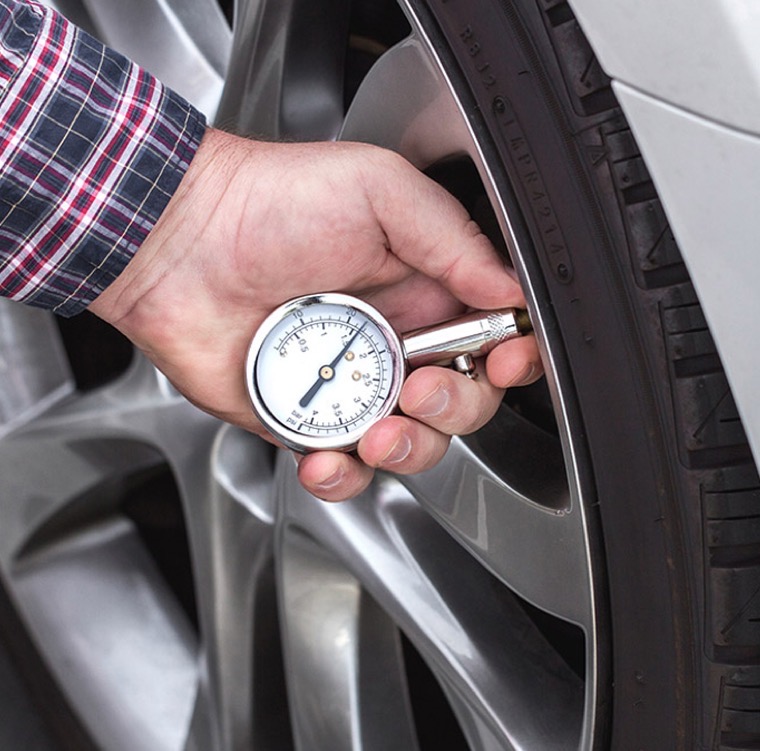
Remove the valve cap and press the gauge straight onto the stem until the hissing stops. A poor seal dumps air and gives a fake low reading. Read the same tire twice if the first attempt leaked. Write the number before you move to the next corner. Compare each tire with the label for that axle, not with the other tires alone.
If a tire is low, add air in short bursts and recheck with the same gauge. If it is high, release air slowly with the gauge pin or the back of a valve tool. Stop and inspect instead of topping off when you see a nail, bulge, exposed cord, cracked valve, missing cap plus wetness, or a tire that loses pressure again overnight.
TPMS, the instrument cluster, and a manufacturer app are useful for trends. They are not the source of the recommended PSI. After you correct the pressure, some cars need a reset or a short drive before the light goes out. If the light stays on or blinks, the job is no longer a routine check.
Find the answer in three steps
Pick the problem, confirm the target, then choose adjustment or inspection.
Step-by-step
- 1Find the cold PSI on the driver-side label or owner manual.
- 2Measure each tire before driving when possible.
- 3Compare target and reading for the correct axle.
- 4Add or release air in small steps and recheck.
- 5Inspect any tire that keeps losing pressure.
Four-step pressure check
Common mistakes
Sidewall max. The sidewall maximum is not the recommended pressure.
Waiting for TPMS. Warning lights do not replace monthly checks.
Skipping inspection. A nail, bulge, or fast loss changes the next step.
Safety notes
Use the vehicle label, check cold when possible, and inspect for damage. Do not keep inflating a tire that drops repeatedly.
FAQ
Can I use the same PSI for every car? No. Use the label or owner manual for that vehicle, tire size, and sometimes front versus rear.
Should I check tire pressure when the tires are cold? Yes whenever you can. The door label is a cold specification.
Is the dashboard reading enough? Use it as a clue. Confirm with a gauge before you add or release air.